
The Birth of Blue Jeans
Copper rivets and a famous patent. A Reno tailor, a San Francisco merchant and a patent dated May 20, 1873: the story behind the riveted denim work pants that became the 501.
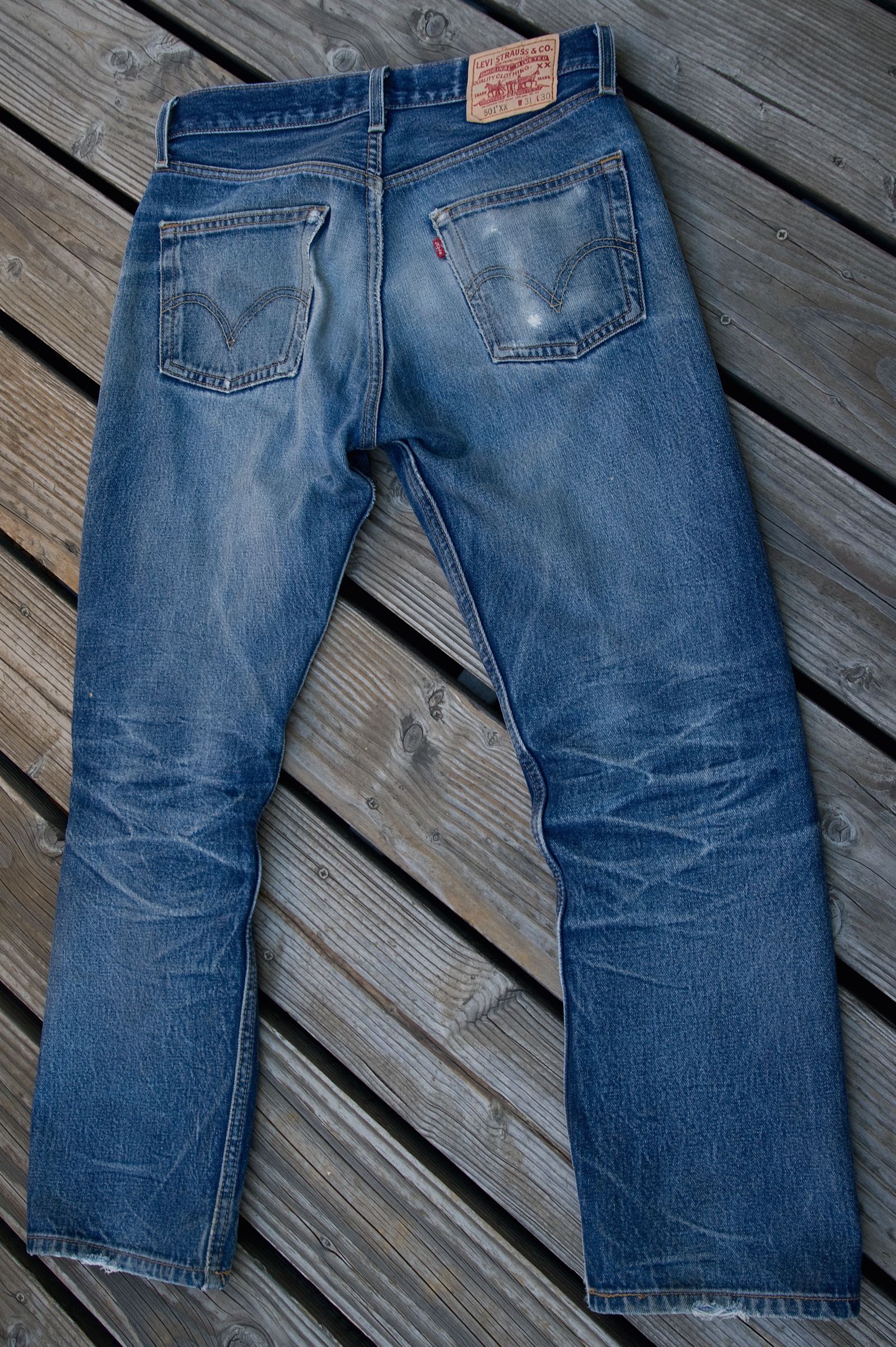
A well-worn pair of 501 jeans: Michael Carian, CC BY-SA 2.0
A tailor with a problem
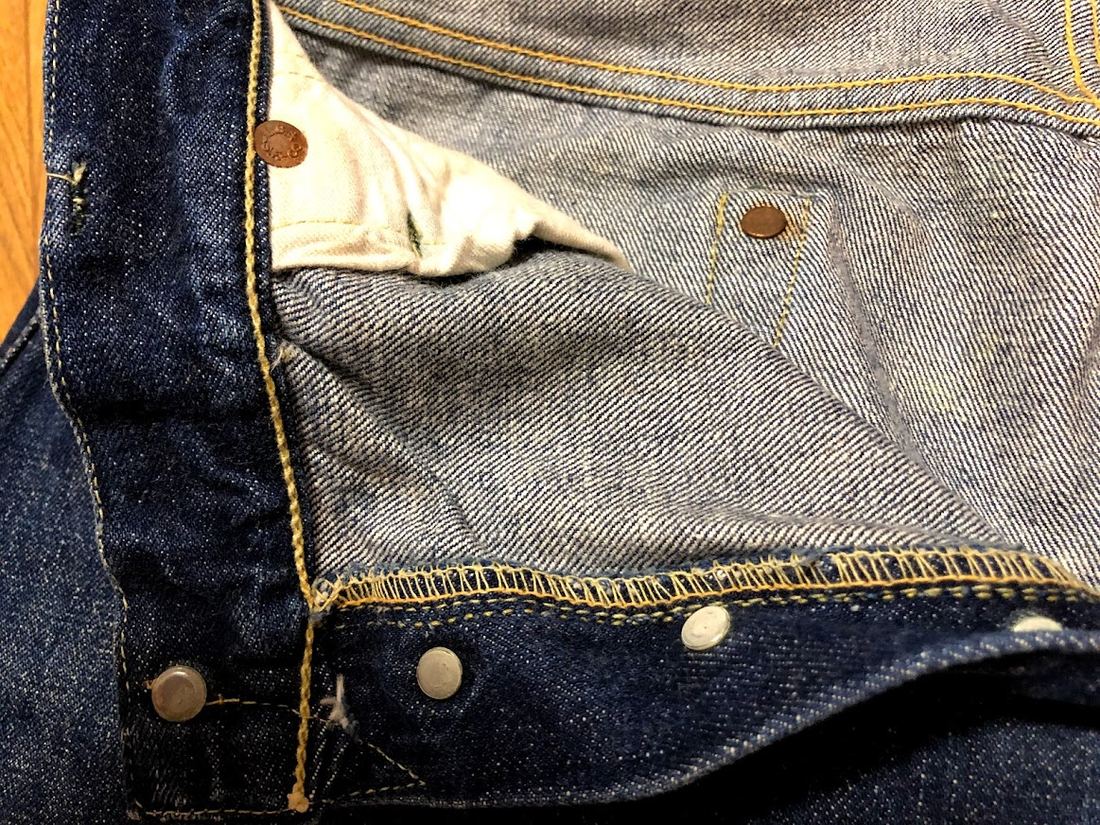
In the early 1870s Jacob Davis, a tailor in Reno, Nevada, came up with a way to make work pants tougher: hammer small copper rivets into the points that tore most often, like the pocket corners. The pants held up, and customers wanted more.
Davis bought his cloth from Levi Strauss, a merchant who had opened a dry goods business in San Francisco in 1853. The two went into business together, and on May 20, 1873, they received US patent 139,121 for the riveting idea. Many people treat that date as the birthday of blue jeans, which means 2023 marked 150 years of riveted denim.
Waist overalls for working people
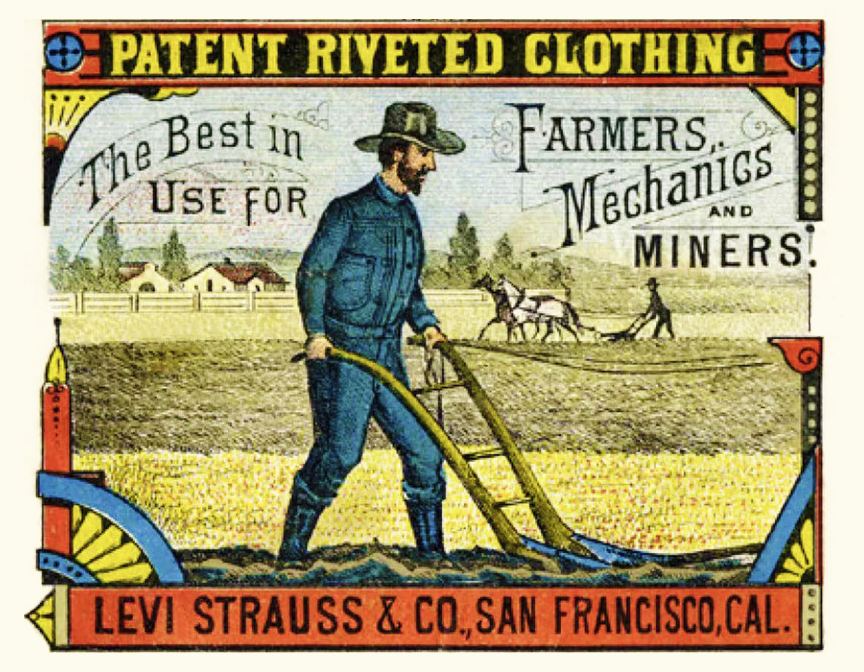
The first riveted pants were not fashion. They were called waist overalls, and they were made for miners, farmers, mechanics and anyone else who wore out clothes fast. Old Levi Strauss advertising labels showed exactly that crowd, promising clothing that could take a beating.
In 1890 the company gave its riveted waist overalls the lot number 501. Nobody knows exactly why that number was chosen, because the company's early records were lost in the 1906 San Francisco earthquake. The same year the number was assigned, 1890, the rivet patent entered the public domain, so other makers were free to copy the idea.
Why denim fades the way it does
The word denim comes from the French phrase serge de Nimes, meaning serge from the town of Nimes. Classic denim is a twill weave, which is why it shows fine diagonal lines. The lengthwise threads are dyed with indigo while the crosswise threads usually stay undyed, so the cloth looks blue on one side and pale on the other.
Indigo mostly sits on the surface of the cotton yarn rather than soaking all the way through. As you wear raw denim, the dye rubs away at the knees, pockets and seams, revealing the lighter core. Those personal fade lines are why denim fans treat a well-worn pair like a diary.
Details that became icons
Small changes over the years turned the 501 into a design classic. The double arc stitching on the back pockets dates to 1873. Belt loops arrived in 1922, and the little red tab on the back pocket appeared in 1936. Over the next century, jeans moved from mines and ranches to campuses, concert stages and runways, becoming one of the most familiar garments in the world. Not bad for a pair of work pants fixed with a few copper rivets.
- A well-worn pair of 501 jeans: Michael Carian, CC BY-SA 2.0
- A vintage Levi Strauss and Co. label for patent riveted clothing: Jim Griffin, CC0
- Copper rivets on a pair of 501XX jeans: Tokunori, CC BY-SA 4.0
Text written by Original General.
← The First Cell Phone CallLow and Slow: The Lowrider Story →


.jpg)
