The First Cell Phone Call
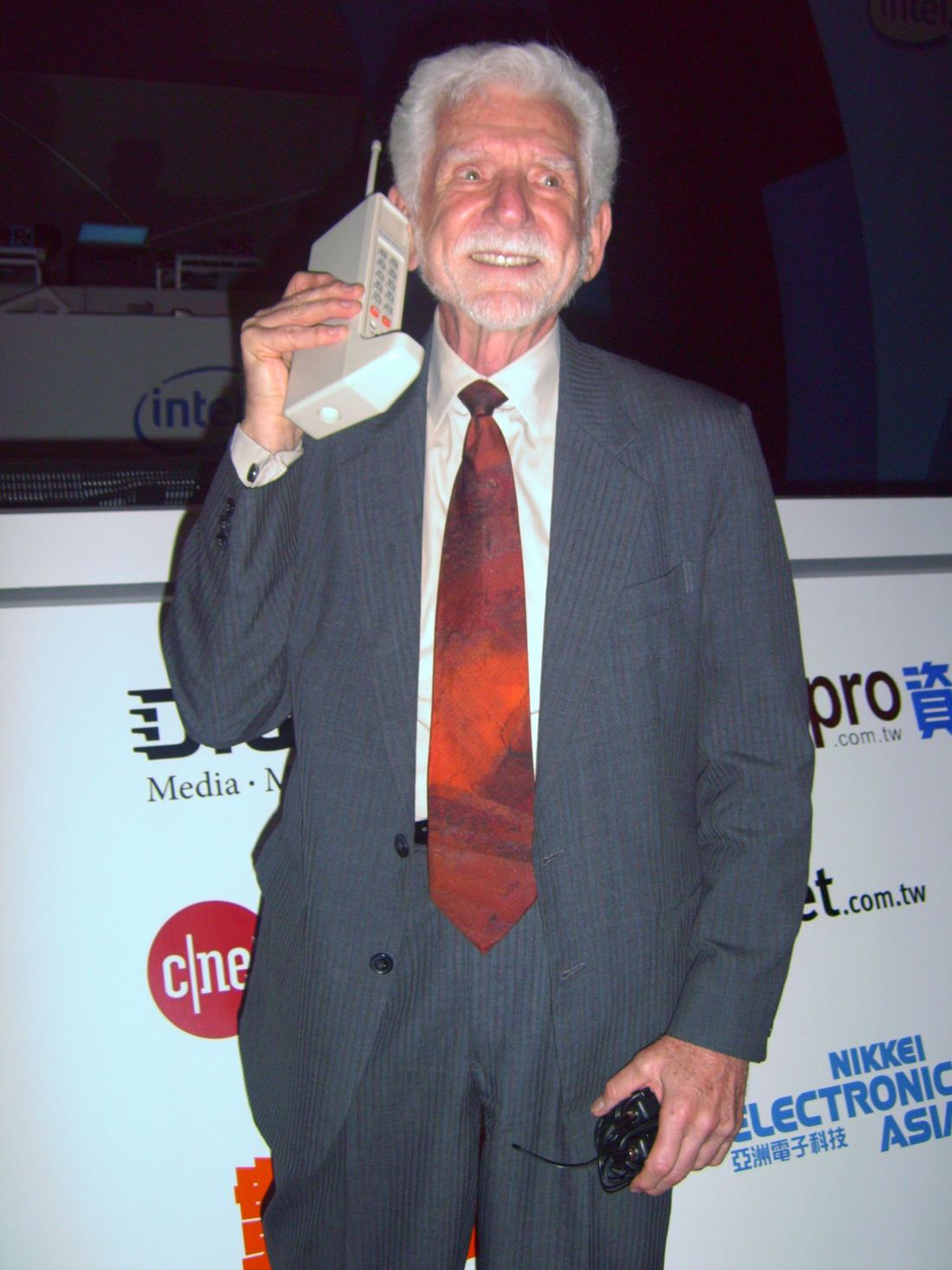
Marty Cooper and the brick. On April 3, 1973, Martin Cooper made a call from a Manhattan sidewalk. Ten years later the DynaTAC 8000X brick phone finally reached customers.
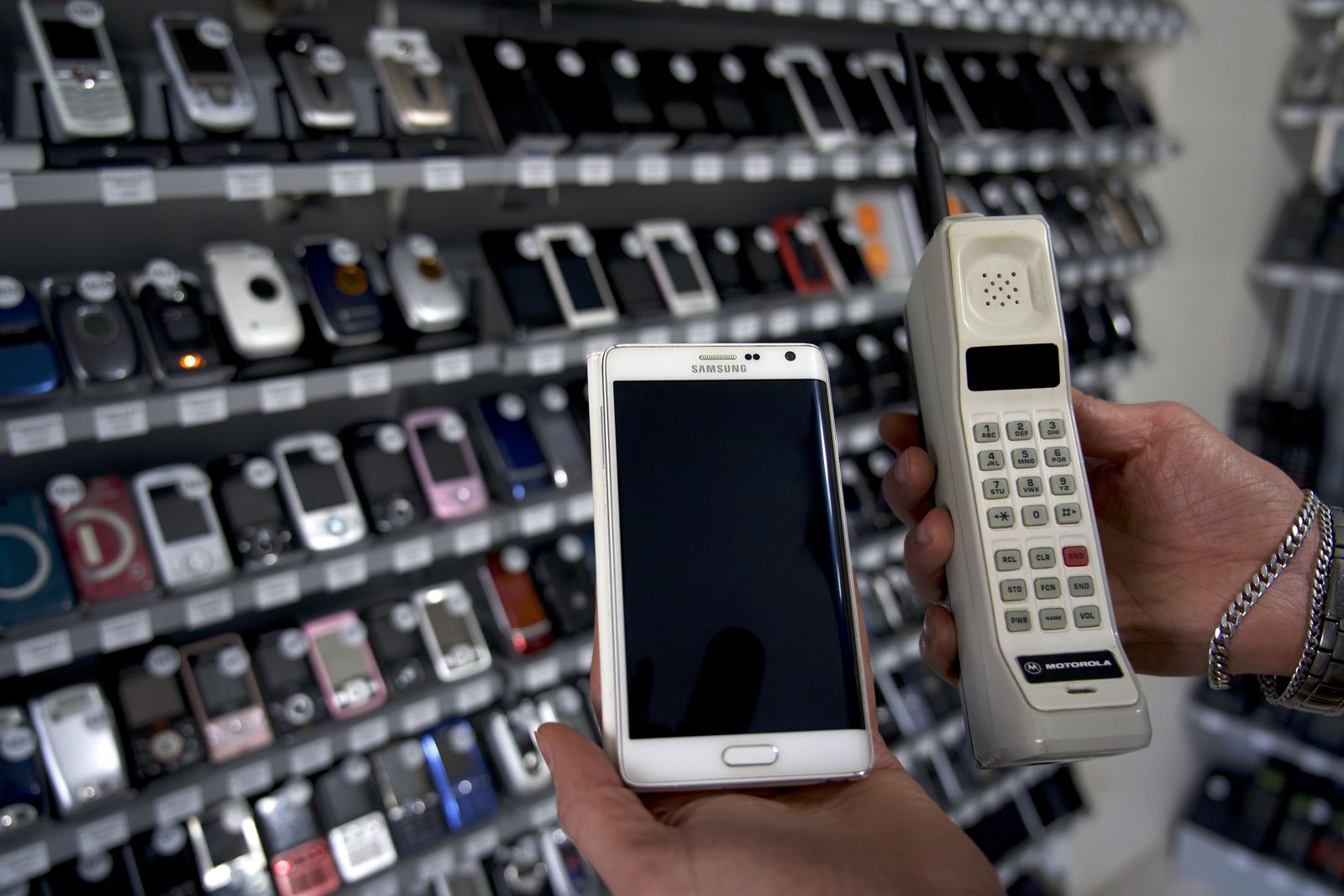
A DynaTAC brick phone beside a modern smartphone: Umut Çolak, Public domain
A call from Sixth Avenue
On April 3, 1973, a Motorola engineer named Martin Cooper stood on Sixth Avenue near the Hilton hotel in Manhattan, holding a prototype phone about the size of a brick. He dialed Joel Engel at AT&T's Bell Labs, the rival team working on mobile phone service, to let him know Motorola had a working handheld phone first. It was the first publicized call from a handheld mobile phone.
In those days, a mobile phone meant a big unit installed in a car. Cooper believed a phone number should belong to a person, not a place, and that you should be able to carry your phone anywhere. Today that sounds obvious. In 1973 it was a bold bet.
Ten years to the store shelf
Making that first call was the easy part, though the prototype was far from ready for the public. Turning it into a real product and a network to support it took about another decade. The Federal Communications Commission approved Motorola's DynaTAC 8000X on September 21, 1983, and the first commercial cellular call in the US was made that October in Chicago.
The DynaTAC 8000X reached customers in 1984 at a price of $3,995, a huge sum at the time. It weighed about 2.5 pounds, stood around 10 inches tall, could store 30 phone numbers and gave you roughly 30 minutes of talk time before needing about 10 hours on the charger.
Why everyone called it the brick
One look explains the nickname. The DynaTAC was long, heavy and boxy, with a stubby antenna on top and rows of chunky keys. Cooper later joked that the short battery life was not much of a problem, because nobody could hold the phone up that long anyway.
Even so, the brick became a symbol of 1980s high living. Carrying one meant you were important enough, or wealthy enough, to be reachable anywhere. It showed up in the hands of stockbrokers and executives, and it has been a favorite retro prop ever since.
From the brick to your pocket
Every phone you have owned since descends from that sidewalk call. Phones shrank into flip phones and candy bars, gained text messaging and cameras, and eventually became the touchscreen computers we carry today. Martin Cooper, born in 1928, lived to see the device he imagined become something nearly everyone carries. So the next time your phone buzzes in your pocket, give a little nod to the brick, the OG of mobile phones.
- A DynaTAC brick phone beside a modern smartphone: Umut Çolak, Public domain
- Martin Cooper with a DynaTAC prototype in 2007: Rico Shen, CC BY-SA 3.0
Text written by Original General.